
Category
· 7 products
Controllers
Wireless and wired controllers for PC and console - Hall-effect and TMR sticks, low-latency connections and layouts built for precise, drift-free control.
-

 Sold out
GAMESIR Cyclone 2
Sold outVendor: GameSirRegular price LE 3,200.00 EGPRegular priceUnit price perLE 3,700.00 EGPSale price LE 3,200.00 EGPSold out -

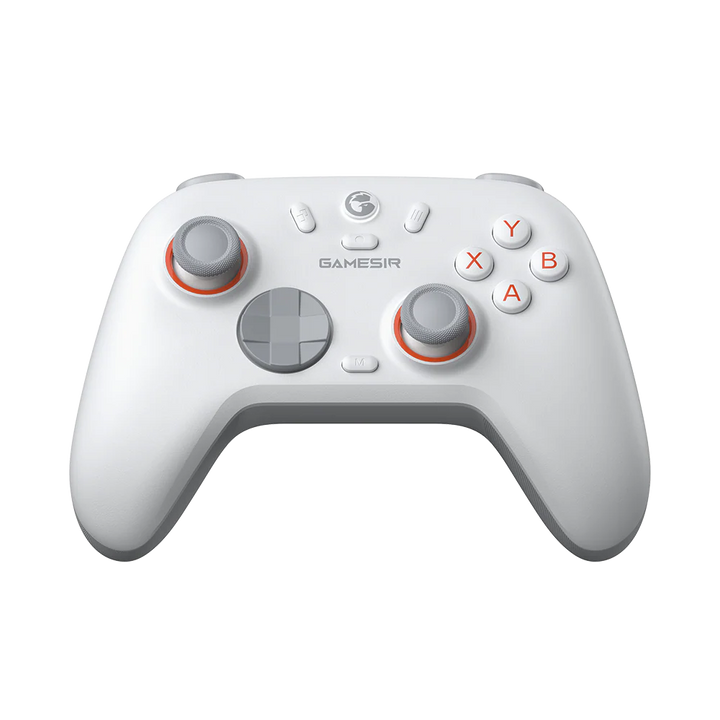
GAMESIR Nova 2 Lite
Vendor: GameSirRegular price LE 2,600.00 EGPRegular priceUnit price per -

GAMESIR G7 Pro Wireless
Vendor: GameSirRegular price LE 5,000.00 EGPRegular priceUnit price per -

GAMESIR Supernova
Vendor: GameSirRegular price LE 3,300.00 EGPRegular priceUnit price per -
 Sold out
Ps5 controller
Sold outVendor: SonyRegular price LE 3,500.00 EGPRegular priceUnit price per -

Game Sir T4 Nova Lite wireless limited edition
Vendor: GameSirRegular price LE 3,000.00 EGPRegular priceUnit price per


Buying guide
Which one is right for you
Immersive Gaming IEMsPositional audio for competitive play - hear the cue before you react to it.
HeadphonesWireless and wired gaming headsets with boom microphones for party chat.
Wireless IEMsBluetooth and true-wireless audio for handheld and mobile play.
BundlesPair a controller with audio and save against buying each piece separately.
Best SellersWhat is actually selling across the store right now.
Key terms, explained
- Stick drift
- Input the controller reports when you are not touching the stick, caused by physical wear on a potentiometer's resistive track. It worsens over time and is the usual reason a controller gets replaced.
- Hall effect
- A stick that senses the strength of a magnetic field instead of using a sliding contact. With nothing touching, there is nothing to wear, so drift does not develop.
- TMR
- Tunnel magnetoresistance - a magnetic stick sensor that reads field direction rather than strength. Typically more sensitive at small movements than Hall-effect and lighter on battery.
- Deadzone
- A small area around centre where movement is ignored, used to hide drift and jitter. Magnetic sticks let you set a much smaller deadzone, which is what makes fine aiming feel more direct.
- Polling rate
- How often the controller reports to the console or PC, in Hz. 1000Hz means once every millisecond. Wired usually allows the highest rate; a 2.4GHz dongle comes close, and Bluetooth is well behind.
- Analogue trigger
- A trigger that reports how far it has travelled, not just whether it is pressed. Essential for throttle and brake control in driving games.
- Hair trigger
- A trigger switched to fire on the smallest movement, removing travel for the fastest shot. Some controllers toggle between hair and analogue modes.
- Back paddles
- Extra buttons on the rear of the grips, mapped to actions you would otherwise need a thumb for. They let you jump, slide or crouch without leaving the stick.
- Gyroscope
- A motion sensor that lets you aim by tilting the pad, used by Nintendo titles and by many PC players through Steam Input. Not every controller has one, so check if you rely on it.
- Haptics and rumble
- Rumble uses spinning weighted motors for broad vibration. Haptic actuators are more precise and can suggest texture and direction rather than simply shaking.
- Onboard profiles
- Button maps, stick curves and trigger modes stored inside the controller, so your setup follows the pad to another machine with no software installed.
FAQ