
Category
· 55 products
Music Preferred IEMs
In-ear monitors chosen for listening - warm, balanced and analytical tunings from Truthear, Moondrop, Tangzu, Simgot, 7Hz, CCA and KZ, including the Crinacle and HBB collaboration sets.
Every set is a genuine unit with 14-day cover against product defects, payable cash on delivery in Egyptian pounds.
-

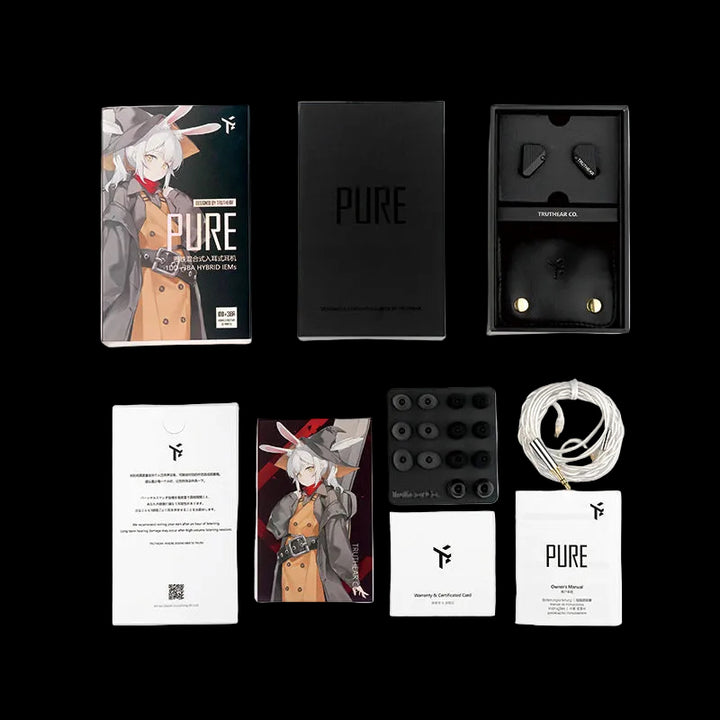
Truthear pure
Vendor: TruthearRegular price LE 7,700.00 EGPRegular priceUnit price per -

 Sold out
TRUTHEAR HEXA
Sold outVendor: TruthearRegular price LE 7,000.00 EGPRegular priceUnit price per -


Truth Ear Nova
Vendor: TruthearRegular price LE 11,500.00 EGPRegular priceUnit price per -
 Sold out
Gk Kunten type C Iem
Sold outVendor: GKRegular price LE 2,400.00 EGPRegular priceUnit price per -

KZ PRX
Vendor: Knowledge Zenith (KZ)Regular price LE 3,400.00 EGPRegular priceUnit price per -

 Sold out
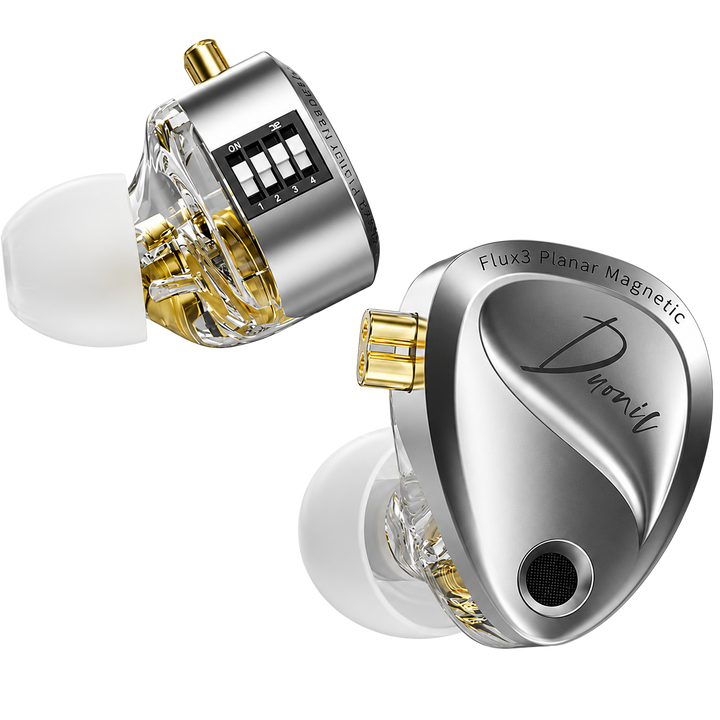
KZ Duonic
Sold outVendor: Knowledge Zenith (KZ)Regular price LE 2,800.00 EGPRegular priceUnit price perLE 3,000.00 EGPSale price LE 2,800.00 EGPSold out -

Kz Eldar
Vendor: Knowledge Zenith (KZ)Regular price LE 1,750.00 EGPRegular priceUnit price per -

 Sold out
KZ Phantom
Sold outVendor: Knowledge Zenith (KZ)Regular price LE 4,300.00 EGPRegular priceUnit price per -

SIMGOT EW200
Vendor: SimgotRegular price LE 3,850.00 EGPRegular priceUnit price per -

 Sale
Moon drop space travel gen 2
Vendor: MoondropRegular price From LE 3,000.00 EGPRegular priceUnit price perLE 3,500.00 EGPSale price From LE 3,000.00 EGPSale -

 Sold out
Zhulinniao qingluan Z4 Iem
Sold outVendor: ZhulinniaoRegular price LE 3,500.00 EGPRegular priceUnit price perLE 4,200.00 EGPSale price LE 3,500.00 EGPSold out -


Truth ear Gate
Vendor: TruthearRegular price From LE 3,100.00 EGPRegular priceUnit price perLE 3,000.00 EGPSale price From LE 3,100.00 EGP -

 Sold out
Tangzu wane’r sg studio edition iem
Sold outVendor: TangzuRegular price From LE 2,300.00 EGPRegular priceUnit price perLE 2,700.00 EGPSale price From LE 2,300.00 EGPSold out -

ZVX Pro
Vendor: Knowledge Zenith (KZ)Regular price LE 1,500.00 EGPRegular priceUnit price per


Buying guide
Which one is right for you
All EarphonesThe complete in-ear range if you would rather browse everything at once.
Studio & Mixing IEMsThe flat, unflattering end of the range for when accuracy beats enjoyment.
Immersive Gaming IEMsPositional clarity first, for the sessions that are not about listening to albums.
Beginner Friendly IEMsA first proper set on a small budget, with nothing extra to buy.
Premium IEMsFlagship tuning for listeners who already know which signature they want.
Audio Top-upsUSB-C DACs, adapters and cables - the jack your phone no longer has.
Key terms, explained
- Sound signature
- The overall tonal character of a set - how it distributes emphasis between bass, mids and treble. It is the single most useful thing to know about an IEM, and it matters far more than the driver count.
- Timbre
- Whether instruments and voices sound like themselves. Good timbre makes a guitar recognisably a guitar rather than a plausible imitation of one. It is judged by ear against real instruments, not read off a graph.
- Soundstage
- How wide, deep and distant the whole scene feels. A large soundstage places the performance around you; a small one puts it against your eardrum. Distinct from imaging, which is about pinpointing one sound inside that scene.
- Detail retrieval
- How much quiet information a set lets through - reverb tails, a breath before a vocal line, fingers moving on strings. High detail retrieval is why a familiar track can reveal new parts on a better set.
- Sub-bass
- Bass below roughly 60Hz - the rumble you feel more than hear. It gives electronic music and modern rap their physical weight, and it depends heavily on a proper ear-tip seal.
- Mid-bass
- Bass from roughly 60Hz to 250Hz - the punch of a kick drum and the body of a bass guitar. Too much of it thickens male vocals and blurs guitars, which is what most people mean by muddy.
- Warm tuning
- A set with lifted bass and lower mids and a gentler treble. Forgiving on poor recordings and easy to listen to for hours, at the cost of some bite and air at the top.
- Neutral tuning
- A set that keeps bass, mids and treble in even proportion so nothing is exaggerated. It sounds plain at first and then usually turns out to be the one you can use for every genre.
- Tuning switches and nozzles
- Physical adjustments built into some sets. Tiny switches on the shell or swappable metal nozzles shift the bass or treble balance, which effectively gives you two or three tunings in one purchase.
- Burn-in
- The idea that an IEM improves after many hours of play. Any real mechanical change is very small; the large part of the effect is your own ears adapting to a new tuning. Judge a set after a week of normal use rather than in the first ten minutes.
- Bitrate and lossless
- How much data a music file keeps. Heavily compressed streams discard the quiet information a resolving set exists to reveal, so raising your streaming quality tier is often a bigger improvement than new hardware.
- Channel balance
- How closely the left and right units match in output. Poor balance pulls the whole image off to one side. If one side sounds quieter, check the seal and the cable connector before assuming a fault.
FAQ